Story 1 · Challenge · kanji + past tense
にちようびの いごと すし
This story is written with kanji. The small kana above each kanji (furigana) tell you how to read it. It also uses the past tense, so it is harder than stories 2–9. Come back to it if it feels like too much.
わたしはガブリエルです。わたしは日本語を 勉強して います。今、 日本に います。今日は 日曜日です。 天気は 晴れです。 朝ご飯は パンと卵でした。
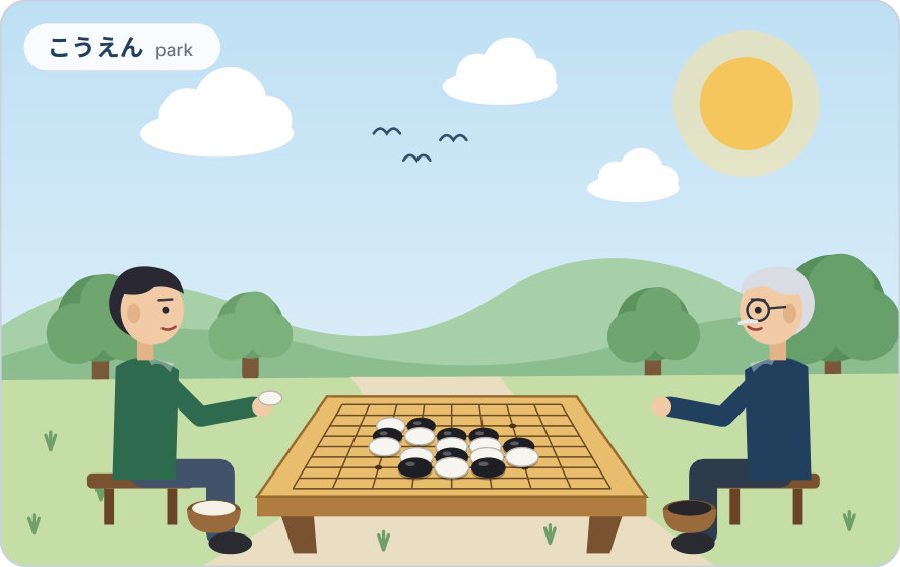
それから、公園に 行きました。 公園は 大きいです。 木が たくさんあります。空は 青いです。 一人の 男の人が います。この人は 囲碁の 先生です。 碁盤の 上に 黒と 白の 石が あります。わたしは囲碁が 好きです。
わたしは「お願い します」と 言いました。 先生と わたしは囲碁を 打ちました。 先生は 上手です。 先生は わたしの石を 取りました。 わたしは 負けました。 「参りました」と 言いました。 先生は 「もう一局」と 言いました。 わたしは勝ちました! 先生は 「すごい」と言いました。
先生と わたしはお腹が 空きました。 それから、寿司の 店に 行きました。 先生は 「お任せで お願い します」と 言いました。 わたしは「わさび抜きで お願い します」と 言いました。 わたしは鮪と サーモンと海老を 食べました。 美味しかったです。 お茶も 飲みました。
わたしと先生は 「ご馳走様 でした」と 言いました。 明日、 また囲碁を 打ちましょう。 今日は とても楽しかったです。
The story at a glance
- How to practise: read the story aloud → cover the English and translate each sentence → cover the Japanese and say it from the English → retell the story in your own words.
- Reading aid: small kana above a kanji tells you how to read it. Notes on the grammar are in the Key grammar section; the numbers after each sentence point to them.
Sentence by sentence
わたしは ガブリエルです。私は ガブリエルです。
Watashi wa Gaburieru desu. I am Gabriel. grammar 1
わたしは にほんごを べんきょうして います。私は 日本語を 勉強して います。
Watashi wa nihongo o benkyōshite imasu. I am studying Japanese. grammar 3, 11
いま、 にほんに います。今、 日本に います。
Ima, Nihon ni imasu. Now I am in Japan. grammar 2
きょうは にちようびです。今日は 日曜日です。
Kyō wa nichiyōbi desu. Today is Sunday. grammar 1
てんきは はれです。天気は 晴れです。
Tenki wa hare desu. The weather is sunny. grammar 1
あさごはんは パンと たまごでした。朝ご飯は パンと 卵でした。
Asagohan wa pan to tamago deshita. Breakfast was bread and eggs. grammar 1, 5
それから、 こうえんに いきました。それから、 公園に 行きました。
Sorekara, kōen ni ikimashita. Then I went to the park. grammar 3, 7
こうえんは おおきいです。公園は 大きいです。
Kōen wa ōkii desu. The park is big. grammar 1
きが たくさん あります。木が たくさん あります。
Ki ga takusan arimasu. There are a lot of trees. grammar 2
そらは あおいです。空は 青いです。
Sora wa aoi desu. The sky is blue. grammar 1
ひとりの おとこのひとが います。一人の 男の人が います。
Hitori no otoko no hito ga imasu. There is a man. grammar 2, 4
この ひとは いごの せんせいです。この 人は 囲碁の 先生です。
Kono hito wa igo no sensei desu. This person is a Go teacher. grammar 1, 4
ごばんの うえに くろと しろの いしが あります。碁盤の 上に 黒と 白の 石が あります。
Goban no ue ni kuro to shiro no ishi ga arimasu. On the go board there are black and white stones. grammar 2, 4, 5
わたしは いごが すきです。私は 囲碁が 好きです。
Watashi wa igo ga suki desu. I like Go. grammar 6
わたしは 「おねがい します」と いいました。私は 「お願い します」と 言いました。
Watashi wa “Onegai shimasu” to iimashita. I said, “Onegai shimasu” (please, said before a game). grammar 8
せんせいと わたしは いごを うちました。先生と 私は 囲碁を 打ちました。
Sensei to watashi wa igo o uchimashita. The teacher and I played Go. grammar 3, 5, 7
せんせいは じょうずです。先生は 上手です。
Sensei wa jōzu desu. The teacher is good at it. grammar 1
せんせいは わたしの いしを とりました。先生は 私の 石を 取りました。
Sensei wa watashi no ishi o torimashita. The teacher captured my stones. grammar 3, 4, 7
わたしは まけました。私は 負けました。
Watashi wa makemashita. I lost. grammar 7
「まいりました」と いいました。「参りました」と 言いました。
“Mairimashita” to iimashita. I said, “Mairimashita” (I resign). grammar 8
せんせいは 「もう いっきょく」と いいました。先生は 「もう 一局」と 言いました。
Sensei wa “Mō ikkyoku” to iimashita. The teacher said, “One more game.” grammar 8
わたしは かちました!私は 勝ちました!
Watashi wa kachimashita! I won! grammar 7
せんせいは 「すごい」と いいました。先生は 「すごい」と 言いました。
Sensei wa “Sugoi” to iimashita. The teacher said, “Wow!” grammar 8
せんせいと わたしは おなかが すきました。先生と 私は お腹が 空きました。
Sensei to watashi wa onaka ga sukimashita. The teacher and I were hungry. grammar 5, 6, 7
それから、 すしの みせに いきました。それから、 寿司の 店に 行きました。
Sorekara, sushi no mise ni ikimashita. Then we went to a sushi shop. grammar 3, 4, 7
せんせいは 「おまかせで おねがい します」と いいました。先生は 「お任せで お願い します」と 言いました。
Sensei wa “Omakase de onegai shimasu” to iimashita. The teacher said, “Chef’s choice, please.” grammar 8, 9
わたしは 「わさびぬきで おねがい します」と いいました。私は 「わさび抜きで お願い します」と 言いました。
Watashi wa “Wasabinuki de onegai shimasu” to iimashita. I said, “Without wasabi, please.” grammar 8, 9
わたしは まぐろと サーモンと えびを たべました。私は 鮪と サーモンと 海老を 食べました。
Watashi wa maguro to sāmon to ebi o tabemashita. I ate tuna, salmon and shrimp. grammar 3, 5, 7
おいしかったです。美味しかったです。
Oishikatta desu. It was delicious. grammar 10
おちゃも のみました。お茶も 飲みました。
Ocha mo nomimashita. I drank tea too. grammar 5, 7
わたしと せんせいは 「ごちそうさま でした」と いいました。私と 先生は 「ご馳走様 でした」と 言いました。
Watashi to sensei wa “Gochisōsama deshita” to iimashita. The teacher and I said, “Gochisōsama deshita” (thank you for the meal). grammar 8
あした、 また いごを うちましょう。明日、 また 囲碁を 打ちましょう。
Ashita, mata igo o uchimashō. Tomorrow, let’s play Go again. grammar 3, 7
きょうは とても たのしかったです。今日は とても 楽しかったです。
Kyō wa totemo tanoshikatta desu. Today was very fun. grammar 10
Vocabulary
- おねがい します お願い します
- please
- ごちそうさま でした ご馳走様 でした
- thank you for the meal
- すごい —
- wow / amazing
- ガブリエル —
- Gabriel (name)
- おとこのひと 男の人
- man
- せんせい 先生
- teacher
- ひと 人
- person
- わたし 私
- I / me
- ひとり 一人
- one person
- あした 明日
- tomorrow
- いま 今
- now
- きょう 今日
- today
- にちようび 日曜日
- Sunday
- うえ 上
- on top / above
- こうえん 公園
- park
- にほん 日本
- Japan
- にほんご 日本語
- Japanese language
- みせ 店
- shop
- あさごはん 朝ご飯
- breakfast
- おいしい 美味しい
- delicious → おいしかった
- おちゃ お茶
- tea
- すし 寿司
- sushi
- たまご 卵
- egg
- パン —
- bread
- えび 海老
- shrimp / prawn
- おまかせ お任せ
- chef’s choice
- まぐろ 鮪
- tuna
- わさびぬき わさび抜き
- without wasabi
- サーモン —
- salmon
- あおい 青い
- blue
- いし 石
- stone
- き 木
- tree
- くろ 黒
- black
- しろ 白
- white
- そら 空
- sky
- てんき 天気
- weather
- はれ 晴れ
- sunny / clear
- おなか お腹
- stomach / belly
- すき 好き
- liked / to like
- たのしい 楽しい
- fun → たのしかった
- おおきい 大きい
- big
- じょうず 上手
- skilful / good at
- ある —
- to exist (things, plants) → あります
- いう 言う
- to say → いいました
- いく 行く
- to go → いきました
- いる —
- to exist (people, animals) → います
- すく 空く
- to become empty → すきました
- たべる 食べる
- to eat → たべました
- とる 取る
- to take / capture → とりました
- のむ 飲む
- to drink → のみました
- べんきょうする 勉強する
- to study → べんきょうして
- この —
- this …
- それから —
- and then / after that
- たくさん —
- a lot
- とても —
- very
- また —
- again
- もう —
- one more … (もう いっきょく)
- いご 囲碁
- the game of Go
- いっきょく 一局
- one game
- うつ 打つ
- to play (a stone) → うちました · うちましょう
- かつ 勝つ
- to win → かちました
- ごばん 碁盤
- go board
- まいりました 参りました
- I resign
- まける 負ける
- to lose → まけました
Key grammar
1 · A は B です — A is B (でした = A was B)
は (written は, said wa) marks the topic — “as for A”. です is the polite “is / am / are”; でした is the past. An い-adjective goes straight before です. There are no words for “a” or “the”.
わたしは ガブリエルです — I am Gabriel
あさごはんは パンでした (朝ご飯は パンでした) — Breakfast was bread
こうえんは おおきいです (公園は 大きいです) — The park is big
2 · 〜が あります / います — there is … · 〜に います: is at …
あります is for things and plants (trees, stones). います is for people and animals. が marks what exists; に marks where it is.
きが たくさん あります (木が たくさん あります) — There are a lot of trees
ひとりの おとこのひとが います (一人の 男の人が います) — There is a man
にほんに います (日本に います) — (I) am in Japan
3 · を and に — を = the thing acted on · に = where to
を (said o) marks the object of the verb. に marks the destination of いきました. The verb always comes last; “I” is often left out when it is obvious, but the story keeps わたしは to practise.
いごを うちました (囲碁を 打ちました) — (we) played Go
いしを とりました (石を 取りました) — (the teacher) captured the stones
こうえんに いきました (公園に 行きました) — went to the park
4 · A の B — B of A (belonging, kind, position)
の joins two nouns, and the second noun is the main one: Go’s teacher = Go teacher.
いごの せんせい (囲碁の 先生) — Go teacher
すしの みせ (寿司の 店) — sushi shop
ごばんの うえ (碁盤の 上) — the top of the go board (on the board)
5 · A と B · も — and / with · also
と joins nouns (“A and B”) or means “with”. も means “also” and replaces は / が / を.
パンと たまご (パンと 卵) — bread and egg
せんせいと わたしは (先生と わたしは) — the teacher and I
おちゃも のみました (お茶も 飲みました) — (I) drank tea too
6 · 〜が すき です · おなかが すきました — I like … · I got hungry
が marks the thing that is liked. For hunger, Japanese says “the stomach became empty” — おなか が すく.
いごが すきです (囲碁が 好きです) — I like Go
おなかが すきました (お腹が 空きました) — I got hungry (the stomach emptied)
7 · Polite verbs: ます → ました — did … (past)
| Dictionary | Kanji | Polite past | Meaning | Type |
|---|---|---|---|---|
| いく | 行く | いきました | went | u |
| うつ | 打つ | うちました | played (a stone) | u |
| とる | 取る | とりました | captured | u |
| かつ | 勝つ | かちました | won | u |
| まける | 負ける | まけました | lost | ru |
| たべる | 食べる | たべました | ate | ru |
| のむ | 飲む | のみました | drank | u |
| いう | 言う | いいました | said | u |
| すく | 空く | すきました | got empty | u |
u-verbs: change the last sound to its い-row and add ました (く→き, つ→ち, る→り, む→み, う→い). ru-verbs: drop る and add ました. Swap ました for ましょう to say “let’s …”: いごを うちましょう (let’s play Go).
8 · 「…」と いいました — said “…”
と after a quotation marks what was said; いいました (いう, said) follows.
おねがい します (お願い します) — please; said before a game starts
まいりました (参りました) — I resign; said when you lose
もう いっきょく (もう 一局) — one more game
ごちそうさま でした (ご馳走様 でした) — thank you for the meal; said after eating
9 · 〜で おねがい します — … please (by means of …)
で means “by / with / by means of”: “with chef’s choice, please”. ぬき means “without”.
おまかせで おねがい します (お任せで お願い します) — chef’s choice, please
わさびぬきで おねがい します (わさび抜きで お願い します) — without wasabi, please
10 · い-adjective past: い → かった です — was …
Drop the final い and add かった, then です: おいしい → おいしかった です. (いい becomes よかった です.)
おいしい → おいしかったです (美味しかったです) — it was delicious
たのしい → たのしかったです (楽しかったです) — it was fun
11 · 〜て います — am …ing
て-form of the verb + います = something in progress or a continuing state. べんきょうする → べんきょうして います.
べんきょう して います (勉強して います) — am studying