Story 2 · Lessons 1–4
えんがわで
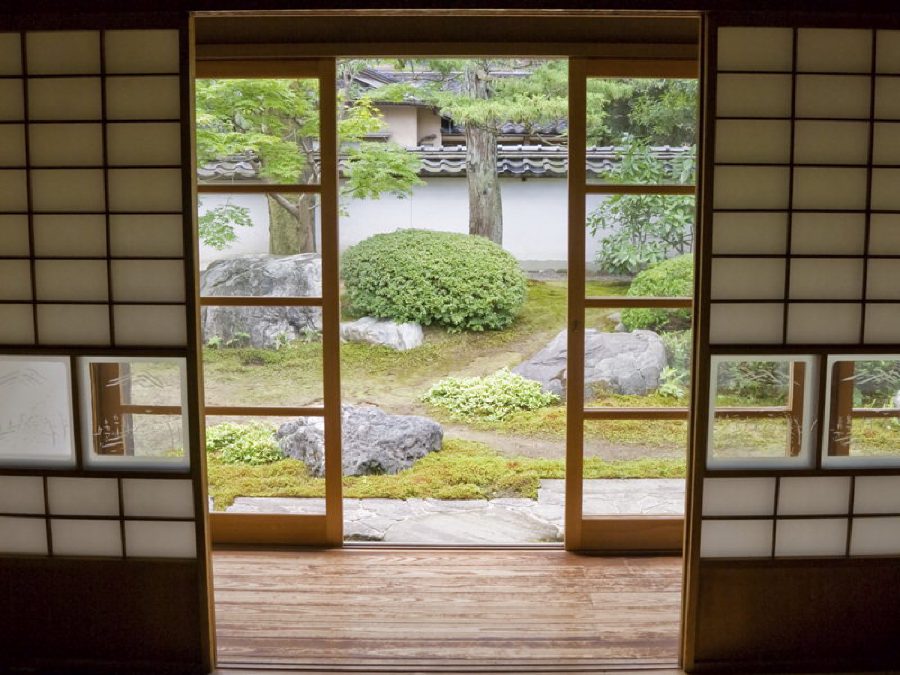
おとこのこがひとりとしろいねこがいっぴき、えんがわにいます。おとこのこはおおきいほんをいっさつもっています。そして、かんじをかいています。ねこは、ねています。
そらはあおいです。きのははみどりです。
いま、おとこのこはひらがなをかいています。ねこは、ねています。
そらはあおいです。くもはしろいです。
いま、おとこのこはカタカナをかいています。ねこは、ねています。
おとこのこがひとりとしろいねこがいっぴき、えんがわにいます。そらはきいろです。たいようはあかいです。
いま、おとこのことねこは、ねています。
Translation
Try reading it first, then tap to show the English
- A boy and a white cat are on the veranda. The boy is holding one big book. And then, he is writing kanji. The cat is sleeping.
- The sky is blue. The tree’s leaves are green. Now, the boy is writing hiragana. The cat is sleeping.
- The sky is blue. The clouds are white. Now, the boy is writing katakana. The cat is sleeping.
- A boy and a white cat are on the veranda. The sky is yellow. The sun is red. Now, the boy and the cat are sleeping.
The story at a glance
- Pattern: そらは〇〇です。… いま、おとこのこは△△をかいています。ねこは、ねています。 Only the slots change.
- Ideas: three scripts (kanji → hiragana → katakana); colours; blue day → yellow and red evening; the boy works while the cat sleeps, until both sleep.
- Reading tip: no spaces, so find the particles (は が を に と の で) first; the verb or です is last. Particle は = “wa”, を = “o”.
Sentence by sentence
おとこのこがひとりとしろいねこがいっぴき、えんがわにいます。
Otoko no ko ga hitori to shiroi neko ga ippiki, engawa ni imasu. A boy and a white cat are on the veranda.
- おとこのこ男の子boy
- がsubject marker
- ひとり一人one person
- とand
- しろい白いwhite
- ねこ猫cat
- がsubject marker
- いっぴき一匹one (small animal)
- えんがわ縁側veranda
- にat (place)
- いますis (polite)
Structure[Person が number] と [Animal が number], [Place] に います
- おとこのこ = おとこ (male) + の + こ (child). が marks a new subject (first mention, so が, not は).
- ひとり / いっぴき are counters placed right after noun + が; と = “and”. しろい (い-adjective) sits before the noun. に = place; います = exists (living things; objects use あります).
おとこのこはおおきいほんをいっさつもっています。
Otoko no ko wa ookii hon o issatsu motte imasu. The boy is holding one big book.
- おとこのこ男の子boy
- はtopic marker
- おおきい大きいbig
- ほん本book
- をobject marker
- いっさつ一冊one volume (book)
- もって持ってhold (て-form)
- いますis (polite)
Structure[Topic は] [Adjective + Noun を] [number] [Verb て + います]
- は: the boy is now known, so he is the topic. を marks the object; いっさつ (冊, for books) goes between the を-phrase and the verb.
- もつ → もって + います = “is holding” (a state).
そして、かんじをかいています。
Soshite, kanji o kaite imasu. And then, he is writing kanji.
- そしてand / and then
- かんじ漢字kanji
- をobject marker
- かいて書いてwrite (て-form)
- いますis (polite)
Structureそして、 [Object を] [Verb て + います]
- そして links to the previous sentence. かく → かいて + います = “is writing” (ongoing). The subject is dropped because it is obvious.
- 書く (write) ≠ 描く (draw).
ねこは、ねています。
Neko wa, nete imasu. The cat is sleeping.
- ねこ猫cat
- はtopic marker
- ねて寝てsleep (て-form)
- いますis (polite)
Structure[Topic は] [Verb て + います]
- ねる (る-verb, drop る) → ねて + います = “is sleeping”. は makes the cat a contrasting topic: the boy works, the cat sleeps. This is the story’s refrain.
そらはあおいです。
Sora wa aoi desu. The sky is blue.
- そら空sky
- はtopic marker
- あおい青いblue
- ですis (polite ending)
Structure[Topic は] [い-adjective] です
- A は B です = “A is B”. あおい (い-adjective) + です = polite.
きのははみどりです。
Ki no ha wa midori desu. The tree’s leaves are green.
- き木tree
- のof / ’s
- は葉leaf
- はtopic marker
- みどり緑green
- ですis (polite ending)
Structure[Noun の Noun] は [Colour noun] です
- Two は: 葉 (leaf, read “ha”) and the topic particle (“wa”): き / の / は / は. の = “’s”. みどり is a noun, so みどりです (no い).
いま、おとこのこはひらがなをかいています。
Ima, otoko no ko wa hiragana o kaite imasu. Now, the boy is writing hiragana.
- いま今now
- おとこのこ男の子boy
- はtopic marker
- ひらがな平仮名hiragana
- をobject marker
- かいて書いてwrite (て-form)
- いますis (polite)
Structure[Time], [Topic は] [Object を] [Verb て + います]
- いま: time words come first; the verb comes last. ひらがな: this story is itself written in hiragana.
くもはしろいです。
Kumo wa shiroi desu. The clouds are white.
- くも雲cloud
- はtopic marker
- しろい白いwhite
- ですis (polite ending)
Structure[Topic は] [い-adjective] です
- くも (雲) cloud, not 蜘蛛 (spider). しろい ended the sentence here but sat before a noun in sentence 1.
いま、おとこのこはカタカナをかいています。
Ima, otoko no ko wa katakana o kaite imasu. Now, the boy is writing katakana.
- いま今now
- おとこのこ男の子boy
- はtopic marker
- カタカナ片仮名katakana
- をobject marker
- かいて書いてwrite (て-form)
- いますis (polite)
Structure[Time], [Topic は] [Object を] [Verb て + います]
- Same frame as 7. カタカナ: for foreign words, names and emphasis; written in katakana itself. The scripts go kanji → hiragana → katakana.
そらはきいろです。
Sora wa kiiro desu. The sky is yellow.
- そら空sky
- はtopic marker
- きいろ黄色yellow
- ですis (polite ending)
Structure[Topic は] [Colour] です
- きいろ (黄色) is a noun: きいろです (also きいろい). The sky changed from blue to yellow: time has passed.
たいようはあかいです。
Taiyō wa akai desu. The sun is red.
- たいよう太陽sun
- はtopic marker
- あかい赤いred
- ですis (polite ending)
Structure[Topic は] [い-adjective] です
- たいよう: よう = long “ō” (taiyō). Yellow sky + red sun = evening.
いま、おとこのことねこは、ねています。
Ima, otoko no ko to neko wa, nete imasu. Now, the boy and the cat are sleeping.
- いま今now
- おとこのこ男の子boy
- とand
- ねこ猫cat
- はtopic marker
- ねて寝てsleep (て-form)
- いますis (polite)
Structure[Time], [Noun と Noun は], [Verb て + います]
- Read おとこのこ / と / ねこ / は, not おとこ / の / こと / ねこ. と = “and”; one は for the pair. Now the boy sleeps too: the contrast resolves.
Repeats: sentences 8 and 12 = sentence 4 (the cat refrain); sentence 9 = sentence 5; sentence 13 = sentence 1 (the story closes where it began, with が again because the scene is re-introduced).
Vocabulary
- あおい 青い
- blue (い-adj)
- あかい 赤い
- red (い-adj)
- いま 今
- now (noun / time)
- います —
- to be, to exist (living things) (verb, polite)
- いっさつ 一冊
- one volume (book) (counter) · さつ + number: いっさつ, にさつ, さんさつ.
- いっぴき 一匹
- one small animal (counter) · ひき / ぴき / びき: いっぴき, にひき, さんびき.
- えんがわ 縁側
- veranda, wooden porch (noun)
- おおきい 大きい
- big, large (い-adj)
- おとこのこ 男の子
- boy (noun) · おとこ (male) + の + こ (child).
- かく 書く
- to write (u-verb)
- かんじ 漢字
- kanji, Chinese characters (noun)
- カタカナ 片仮名
- katakana script (noun)
- き 木
- tree (noun)
- きいろ 黄色
- yellow (noun, or い-adj) · きいろです / きいろいです.
- くも 雲
- cloud (noun) · Same sound as 蜘蛛 (spider).
- しろい 白い
- white (い-adj)
- そして —
- and, and then (conjunction) · Links sentences.
- そら 空
- sky (noun)
- たいよう 太陽
- sun (noun) · Long “ō” in よう.
- です —
- is / am / are (polite) · Ends polite statements: A は B です.
- ねこ 猫
- cat (noun)
- ねる 寝る
- to sleep, to go to bed (る-verb) · て-form: ねて. ねています = is sleeping.
- は 葉
- leaf (noun)
- ひとり 一人
- one person (counter) · Irregular: ひとり, ふたり, then さんにん…
- ひらがな 平仮名
- hiragana script (noun)
- ほん 本
- book (noun)
- みどり 緑
- green (noun) · A noun, so みどりです (no い).
- もつ 持つ
- to hold, to carry, to have (u-verb)
Particles
| Particle | Job | From the story | Note |
|---|---|---|---|
| は (wa) | Topic: “as for…” | おとこのこはほんをもっています。 | Known information. Also contrast: ねこは、ねています。 |
| が (ga) | Subject, new information | おとこのこがひとり…います。 | Introduces someone or something for the first time. |
| を (o) | Direct object | かんじをかいています。 | Marks what the action is done to. |
| に (ni) | Place of existence | えんがわにいます。 | With います / あります: where something is. |
| で (de) | Place of action | えんがわで (title) | With action verbs: where it happens. “On the veranda (…happens)”. |
| と (to) | “and” between nouns | ひとりとしろいねこ | Joins nouns, not sentences. |
| の (no) | “of / ’s” | きのは | Links two nouns: owner の thing. |
Key grammar
〜ています: “is doing” / “is in the state of”
| Verb | て-form rule | Result |
|---|---|---|
| かく (書く) | く → いて | かいています = is writing |
| もつ (持つ) | つ → って | もっています = is holding |
| ねる (寝る) | drop る + て | ねています = is sleeping |
Counters and adjectives
| Counter | 1 | 2 | 3 |
|---|---|---|---|
| 人 (people) | ひとり | ふたり | さんにん |
| 匹 (small animals) | いっぴき | にひき | さんびき |
| 冊 (books) | いっさつ | にさつ | さんさつ |
い-adjectives (あおい, あかい, しろい, おおきい) go straight before a noun; colour nouns (みどり, きいろ) take です without い.