Story 5 · Lessons 1–7
びょうきのおんなのこといしゃ
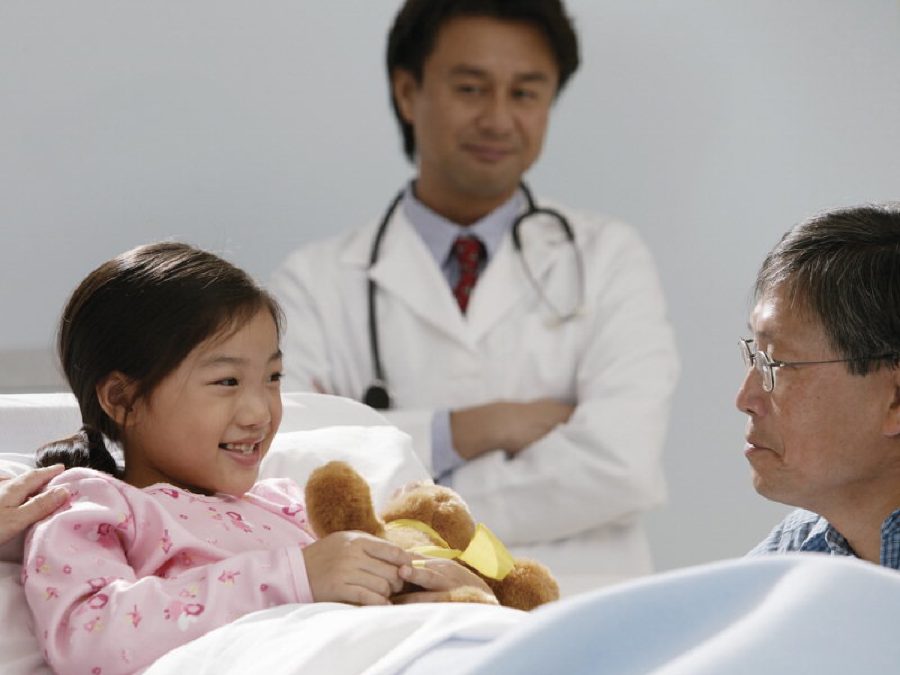
しろいしんしつで、おんなのこがベッドにねています。
いしゃが、いすにすわっています。いしゃはスーツをきています。かれはちいさいくろいほんに、かいています。
しろいテーブルのうえにみどりのりんごがにこときいろいはながいっぽんあります。
いしゃはいいました。
「こんにちは。」
おんなのこはいいました。
「こんにちは。わたしのおいしゃさんですか。」
「はい、わたしのなまえはすずきです。どうぞよろしく。」
おんなのこはいいました。
「わたしのなまえはたなかあやこです。これはわたしのはなですか。」
「はい、あなたのはなです。」
おんなのこはいいました。
「わたしはきいろのはながだいすきです。これは、わたしのおかあさんからですか。」
いしゃはいいました。
「いいえ、あやこさん。はなはあなたのおとうさんからです。」
「おとうさん? おとうさんはどこですか。」
いしゃはいいました。
「おとうさんはしんぶんをかっています。あやこさん、つかれていますか。」
「つかれています。」
いしゃはいいました。
「ぐあいがわるいですか。」
「いいえ、だいじょうぶです。」
いしゃはいいました。
「あついですか。」
「はい。あついです。のどがかわいています。なにをかいていますか。」
「あなたのなまえをかいています、あやこさん。それから…。」
おとこのひとがいいました。
「わたしのこどもは、どこですか。」
「おはようございます。おとうさん。」
おとこのひとは、いしゃにいいました。
「あやこはだいじょうぶですか。」
「はい、だいじょうぶです。」
おんなのこはいいました。
「おとうさん! わたしはだいじょうぶです。おなかがすいています。」
おとこのひとはいいました。
「よかった。アイスクリームがありますよ。」
Translation
Try reading it first, then tap to show the English
- In the white bedroom, a girl is lying in bed.
- A doctor is sitting on a chair.
- The doctor is wearing a suit.
- He is writing in a small black book.
- On the white table there are two green apples and one yellow flower.
- The doctor said… (the “X said” tag that opens each exchange)
- Doctor: “Hello.”
- Ayako: “Hello. Are you my doctor?”
- Doctor: “Yes, my name is Suzuki. Pleased to meet you.”
- Ayako: “My name is Tanaka Ayako. Is this my flower?”
- Doctor: “Yes, it’s your flower.”
- Ayako: “I love yellow flowers. Is this from my mother?”
- Doctor: “No, Ayako. The flower is from your father.”
- Ayako: “Father? Where is my father?”
- Doctor: “Your father is buying a newspaper. Ayako, are you tired?”
- Ayako: “I’m tired.”
- Doctor: “Are you feeling unwell?”
- Ayako: “No, I’m fine.”
- Doctor: “Are you hot?”
- Ayako: “Yes. I’m hot. I’m thirsty. What are you writing?”
- Doctor: “I’m writing your name, Ayako. And then…”
- Father: “Where is my child?”
- Doctor: “Good morning, Father.”
- Father: “Is Ayako all right?”
- Doctor: “Yes, she’s fine.”
- Ayako: “Father! I’m fine. I’m hungry.”
- Father: “Thank goodness. There’s ice cream!”
The story at a glance
- Pattern: a tag 「X は いいました。」 + quoted words 「…」. Speakers alternate without new tags; questions end in 〜ですか, answers in 〜です / 〜ています.
- Ideas: a hospital-like scene (colours, objects) → meeting the doctor (names, polite greetings) → who sent the flowers → how she feels (tired, hot, thirsty) → Father arrives → she is fine and hungry → ice cream.
- Reading tip: no spaces, so find the particles (は が を に で と の から か) first. Watch for おんなのこ/と/いしゃ in the title and に こ と in sentence 5 — both can be mis-split.
- Speaker labels (Doctor / Ayako / Father) are worked out from who answers whom.
Sentence by sentence
しろいしんしつで、おんなのこがベッドにねています。
Shiroi shinshitsu de, onna no ko ga beddo ni nete imasu. In the white bedroom, a girl is lying in bed.
- しろい白いwhite
- しんしつ寝室bedroom
- でat (place of action)
- おんなのこ女の子girl
- がsubject marker
- ベッドbed
- にin / on
- ねて寝てsleep, lie (て-form)
- いますis (polite)
Structure[Place で] [Person が] [Place に] [Verb て + います]
- で = where the action happens (the girl is resting in the bedroom); に = the exact spot she lies on (the bed). が: a new character is introduced.
- おんなのこ = おんな (female) + の + こ (child) — the partner of おとこのこ. しんしつ = 寝 (sleep) + 室 (room). ベッド is a katakana loanword.
いしゃが、いすにすわっています。
Isha ga, isu ni suwatte imasu. A doctor is sitting on a chair.
- いしゃ医者doctor
- がsubject marker
- いす椅子chair
- にon (where one sits)
- すわって座ってsit (て-form)
- いますis (polite)
Structure[Person が] [Place に] [Verb て + います]
- すわる (u-verb): る → って, so すわっています = “is seated” (a state, like English “is sitting”). Another new person on stage → が again.
いしゃはスーツをきています。
Isha wa suutsu o kite imasu. The doctor is wearing a suit.
- いしゃ医者doctor
- はtopic marker
- スーツsuit
- をobject marker
- きて着てwear (て-form)
- いますis (polite)
Structure[Topic は] [Object を] [Verb て + います]
- は: the doctor is now known, so he becomes the topic. きる (る-verb, drop る) → きて. “Wearing” is a state in Japanese: きています (not “is putting on”).
かれはちいさいくろいほんに、かいています。
Kare wa chiisai kuroi hon ni, kaite imasu. He is writing in a small black book.
- かれ彼he
- はtopic marker
- ちいさい小さいsmall
- くろい黒いblack
- ほん本book
- にin / on
- かいて書いてwrite (て-form)
- いますis (polite)
Structure[Topic は] [Adj Adj Noun に] [Verb て + います]
- Two い-adjectives stack before the noun: ちいさい くろい ほん = “a small black book”. に marks where the writing goes (in / on the book). Japanese usually drops pronouns; かれ is used here once.
しろいテーブルのうえにみどりのりんごがにこときいろいはながいっぽんあります。
Shiroi teeburu no ue ni midori no ringo ga niko to kiiroi hana ga ippon arimasu. On the white table there are two green apples and one yellow flower.
- しろい白いwhite
- テーブルtable
- のof / ’s
- うえ上top, above
- にat (place)
- みどり緑green
- のof / ’s
- りんご林檎apple
- がsubject marker
- にこ二個two (small things)
- とand
- きいろい黄色いyellow
- はな花flower
- がsubject marker
- いっぽん一本one (long thing)
- ありますexists (things)
Structure[Place の うえ に] [Thing が number] と [Thing が number] あります
- Reading trap: にこと = にこ + と (“two pieces” + “and”), not に + こと. こ (個) counts small round things; ほん / ぽん / ぼん (本) counts long thin things such as flowers: いっぽん, にほん, さんぼん.
- の うえ に = “on top of”. みどり is a colour noun → みどりのりんご; きいろい is the い-adjective form → きいろいはな (both work for yellow). あります = exists, for things (living things use います).
いしゃはいいました。
Isha wa iimashita. The doctor said. (opens each exchange — 12 times)
- いしゃ医者doctor
- はtopic marker
- いいました言いましたsaid (past polite)
Structure[Speaker は/が] いいました。 「 words spoken 」
- Past polite: ます → ました (いいます → いいました). 「 」 hold the exact words. Quotes then alternate between the two speakers without any new tag, so you must keep track of who is talking.
- Variants: おんなのこは〜 (girl, ×4) · おとこのひとが〜 (the man, first time → が) · おとこのひとは、いしゃに〜 (said to the doctor: に = recipient) · おとこのひとは〜 (×1).
こんにちは。
Konnichiwa. Hello.
- こんにちは今日はhello / good afternoon
StructureGreeting (set phrase)
- Written こんにちは but said “konnichiwa”: the は is a leftover topic particle from the old phrase 今日は… Daytime greeting.
こんにちは。わたしのおいしゃさんですか。
Konnichiwa. Watashi no oisha-san desu ka. Hello. Are you my doctor?
- こんにちは今日はhello
- わたし私I, me
- のof / ’s
- おいしゃさんお医者さんdoctor (polite)
- ですis (polite)
- かquestion marker
Structure[Noun の Noun] です か
- か at the end turns a statement into a question (no “?” needed). わたしの = “my”. おいしゃさん is the polite way to say “doctor” when speaking to / about them; narration uses いしゃ.
はい、わたしのなまえはすずきです。どうぞよろしく。
Hai, watashi no namae wa Suzuki desu. Douzo yoroshiku. Yes, my name is Suzuki. Pleased to meet you.
- はいyes
- わたし私I, me
- のof / ’s
- なまえ名前name
- はtopic marker
- すずき鈴木Suzuki
- ですis (polite)
- どうぞplease
- よろしく宜しくkindly, well
Structure[Topic は] [Name] です · どうぞ よろしく
- A は B です = “A is B”. どうぞよろしく is the set phrase for first meetings: “Pleased to meet you / please treat me well”. He gives only his family name, as is usual when introducing yourself.
わたしのなまえはたなかあやこです。これはわたしのはなですか。
Watashi no namae wa Tanaka Ayako desu. Kore wa watashi no hana desu ka. My name is Tanaka Ayako. Is this my flower?
- わたし私I
- のof / ’s
- なまえ名前name
- はtopic marker
- たなかあやこ田中あやこTanaka Ayako
- ですis (polite)
- これthis
- はtopic marker
- わたし私I
- のof / ’s
- はな花flower
- ですis (polite)
- かquestion marker
Structure[Topic は] [Name] です · [これ は] [Noun の Noun] です か
- Japanese names go family name first: たなか (Tanaka) + あやこ (Ayako). She does not add さん to her own name. これ = “this (one near me)”, pointing at the flower.
- はな = 花 (flower) or 鼻 (nose): context decides. Here it is the flower on the table.
はい、あなたのはなです。
Hai, anata no hana desu. Yes, it’s your flower.
- はいyes
- あなた貴方you
- のof / ’s
- はな花flower
- ですis (polite)
Structureはい、 [Noun の Noun] です
- あなた = “you”. Textbooks use it a lot, but in real life people prefer the name + さん (as the doctor does in 13). The subject (“it”) is dropped.
わたしはきいろのはながだいすきです。これは、わたしのおかあさんからですか。
Watashi wa kiiro no hana ga daisuki desu. Kore wa, watashi no okaasan kara desu ka. I love yellow flowers. Is this from my mother?
- わたし私I
- はtopic marker
- きいろ黄色yellow
- のof / ’s
- はな花flower
- がsubject marker
- だいすき大好きlove (な-adj)
- ですis (polite)
- これthis
- はtopic marker
- わたし私I
- のof / ’s
- おかあさんお母さんmother
- からfrom
- ですis (polite)
- かquestion marker
Structure[Topic は] [Colour の Noun が] だいすき です · [Topic は] [Person から] です か
- だいすき (な-adjective) takes が for the thing loved: 〜が だいすき, not 〜を. きいろのはな: colour noun + の (compare きいろいはな in 5).
- から = “from” (source or giver): Xからです = “it’s from X”.
いいえ、あやこさん。はなはあなたのおとうさんからです。
Iie, Ayako-san. Hana wa anata no otousan kara desu. No, Ayako. The flower is from your father.
- いいえno
- あやこAyako
- さんMr / Ms
- はな花flower
- はtopic marker
- あなた貴方you
- のof / ’s
- おとうさんお父さんfather
- からfrom
- ですis (polite)
Structureいいえ、[Name さん]。 [Topic は] [Person から] です
- さん goes on other people’s names, never your own. はなは: read “hana wa”. The doctor answers the question by swapping おかあさん → おとうさん.
おとうさん? おとうさんはどこですか。
Otousan? Otousan wa doko desu ka. Father? Where is my father?
- おとうさんお父さんfather
- おとうさんお父さんfather
- はtopic marker
- どこwhere
- ですis (polite)
- かquestion marker
Structure[Topic は] どこ です か
- A は どこ ですか = “Where is A?” A word repeated with “?” is a surprised echo (“Father?!”).
おとうさんはしんぶんをかっています。あやこさん、つかれていますか。
Otousan wa shinbun o katte imasu. Ayako-san, tsukarete imasu ka. Your father is buying a newspaper. Ayako, are you tired?
- おとうさんお父さんfather
- はtopic marker
- しんぶん新聞newspaper
- をobject marker
- かって買ってbuy (て-form)
- いますis (polite)
- あやこAyako
- さんMr / Ms
- つかれて疲れてget tired (て-form)
- いますis (polite)
- かquestion marker
Structure[Topic は] [Object を] [Verb て + います] · [Name さん]、 [Verb て + います] か
- かう (買う, u-verb): う → って → かっています = “is buying” (not 飼う, “keep a pet”). つかれる (る-verb): つかれています = “is tired”: tiredness is a state you are in, so Japanese uses ています.
- あやこさん、… = calling someone by name before speaking to them.
つかれています。
Tsukarete imasu. I’m tired.
- つかれて疲れてget tired (て-form)
- いますis (polite)
Structure[Verb て + います]
- A one-word answer: the subject (I) is dropped, and she does not even need はい. Same verb as 15, so you can answer by repeating it.
ぐあいがわるいですか。
Guai ga warui desu ka. Are you feeling unwell? (Is your condition bad?)
- ぐあい具合condition
- がsubject marker
- わるい悪いbad
- ですis (polite)
- かquestion marker
Structure[Noun が] [い-adjective] です か
- ぐあいがわるい = literally “(your) condition is bad”, the usual way to ask “are you unwell?”. が marks what the adjective describes. い-adjective + です = polite.
いいえ、だいじょうぶです。
Iie, daijoubu desu. No, I’m fine.
- いいえno
- だいじょうぶ大丈夫all right (な-adj)
- ですis (polite)
Structureいいえ、 [な-adjective] です
- いいえ answers the question literally: “Is it bad?” — “No (it is not bad).” だいじょうぶ = fine, OK; it takes です directly (no い).
あついですか。
Atsui desu ka. Are you hot?
- あつい暑いhot
- ですis (polite)
- かquestion marker
Structure[い-adjective] です か
- あつい has two kanji: 暑い (hot weather / feeling hot) and 熱い (hot to the touch: tea, a bath). Here she is asked if she feels hot.
はい。あついです。のどがかわいています。なにをかいていますか。
Hai. Atsui desu. Nodo ga kawaite imasu. Nani o kaite imasu ka. Yes. I’m hot. I’m thirsty. What are you writing?
- はいyes
- あつい暑いhot
- ですis (polite)
- のど喉throat
- がsubject marker
- かわいて渇いてbe dry (て-form)
- いますis (polite)
- なに何what
- をobject marker
- かいて書いてwrite (て-form)
- いますis (polite)
- かquestion marker
Structure[Body part が] [Verb て + います] · [なに を] [Verb て + います] か
- のどが かわいています = “I’m thirsty” (lit. “the throat is dry”). かわく → かわいて (く → いて). Don’t confuse with かわいい (cute).
- Question word: なに takes the place of the answer in the sentence: 〜を かいていますか = “What are you writing?”. She turns the tables and questions the doctor.
あなたのなまえをかいています、あやこさん。それから…。
Anata no namae o kaite imasu, Ayako-san. Sorekara… I’m writing your name, Ayako. And then…
- あなた貴方you
- のof / ’s
- なまえ名前name
- をobject marker
- かいて書いてwrite (て-form)
- いますis (polite)
- あやこAyako
- さんMr / Ms
- それからand then
Structure[Object を] [Verb て + います]、 [Name さん]。 それから…
- The answer repeats the question’s verb. The name at the end is direct address, which is natural in speech. それから = “and then / after that”; the “…” means he trails off, leaving the story open.
わたしのこどもは、どこですか。
Watashi no kodomo wa, doko desu ka. Where is my child?
- わたし私I
- のof / ’s
- こども子どもchild
- はtopic marker
- どこwhere
- ですis (polite)
- かquestion marker
Structure[Noun の Noun は] どこ です か
- Same frame as 14. わたしのこども = “my child”. A new speaker walks in: the おとこのひと is the father.
おはようございます。おとうさん。
Ohayou gozaimasu. Otousan. Good morning, Father.
- おはようございますgood morning (polite)
- おとうさんお父さんfather
StructureGreeting、 [Person]
- おはよう (casual) + ございます = polite “good morning”, used until about midday. No speaker is marked here: it is most likely the doctor greeting the arriving father (calling the parent おとうさん).
あやこはだいじょうぶですか。
Ayako wa daijoubu desu ka. Is Ayako all right?
- あやこAyako
- はtopic marker
- だいじょうぶ大丈夫all right (な-adj)
- ですis (polite)
- かquestion marker
Structure[Topic は] [な-adjective] です か
- The father says あやこ without さん: parents drop it for their own child. Said to the doctor (see the に in the tag, 6).
はい、だいじょうぶです。
Hai, daijoubu desu. Yes, she’s fine.
- はいyes
- だいじょうぶ大丈夫all right (な-adj)
- ですis (polite)
Structureはい、 [な-adjective] です
- Short answer; the subject (“she”) is dropped. Compare 18: there いいえ answered “is it bad?”; here はい answers “is she all right?”.
おとうさん! わたしはだいじょうぶです。おなかがすいています。
Otousan! Watashi wa daijoubu desu. Onaka ga suite imasu. Father! I’m fine. I’m hungry.
- おとうさんお父さんfather
- わたし私I
- はtopic marker
- だいじょうぶ大丈夫all right (な-adj)
- ですis (polite)
- おなかお腹stomach
- がsubject marker
- すいて空いてbe empty (て-form)
- いますis (polite)
Structure[Topic は] [な-adjective] です · [Body part が] [Verb て + います]
- おなかが すいています = “I’m hungry” (lit. “the stomach is empty”). Pairs with のどが かわいています (20): body part が + verb. すく → すいて (く → いて).
よかった。アイスクリームがありますよ。
Yokatta. Aisu kuriimu ga arimasu yo. Thank goodness. There’s ice cream!
- よかった良かったgood / glad
- アイスクリームice cream
- がsubject marker
- ありますexists (things)
- よyou know!
Structureよかった。 [Thing が] あります よ
- よかった = past tense of いい: “that’s good / what a relief”. The past tense expresses relief at news just learned. よ = friendly “I’m telling you!”. Ice cream is a thing, so あります (not います). The story ends on a treat: she is better.
Repeats: the “X said” tag (6) recurs 12 times — いしゃは ×5, おんなのこは ×4, おとこのひとが ×1, おとこのひとは、いしゃに ×1, おとこのひとは ×1.
Vocabulary
- アイスクリーム —
- ice cream (noun) · loanword
- あつい 暑い
- hot (feeling / weather) (い-adj) · 熱い = hot to touch
- あなた 貴方
- you (pronoun)
- あります —
- to exist, to be (things) (u-verb) · ある · living: います
- いいえ —
- no
- いう 言う
- to say (verb) · いいました = said
- いしゃ 医者
- doctor (noun) · polite: おいしゃさん
- いす 椅子
- chair (noun)
- いっぽん 一本
- one (long, thin thing) (counter) · いっぽん, にほん, さんぼん
- うえ 上
- top, above, on (noun) · Aのうえに = on A
- おかあさん お母さん
- mother (noun)
- おとうさん お父さん
- father (noun)
- おとこのひと 男の人
- man (noun)
- おなか お腹
- stomach, belly (noun) · おなかがすく = get hungry
- おはようございます —
- good morning (polite greeting)
- おんなのこ 女の子
- girl (noun) · おんな + の + こ
- かう 買う
- to buy (u-verb) · かって
- かく 書く
- to write (u-verb) · かいて
- かれ 彼
- he (pronoun)
- かわく 渇く
- to be dry, thirsty (u-verb) · のどがかわく
- きいろい 黄色い
- yellow (い-adj) · also きいろ (noun)
- きる 着る
- to wear (clothes) (る-verb) · きて
- くろい 黒い
- black (い-adj)
- ぐあい 具合
- condition, state (noun) · ぐあいがわるい = unwell
- こども 子ども
- child (noun)
- これ —
- this (thing) (pronoun)
- こんにちは 今日は
- hello, good afternoon (greeting)
- さん —
- Mr / Ms (suffix) · never on your own name
- しんしつ 寝室
- bedroom (noun)
- しんぶん 新聞
- newspaper (noun)
- スーツ —
- suit (noun) · loanword
- すく 空く
- to become empty (u-verb) · おなかがすく
- すわる 座る
- to sit (u-verb) · すわって
- それから —
- and then, after that (conjunction)
- だいじょうぶ 大丈夫
- all right, OK, fine (な-adj)
- だいすき 大好き
- love, like very much (な-adj) · 〜が だいすき
- ちいさい 小さい
- small (い-adj)
- つかれる 疲れる
- to get tired (る-verb) · つかれて
- テーブル —
- table (noun) · loanword
- どうぞ —
- please, go ahead (adverb)
- どこ —
- where (question word)
- なに 何
- what (question word)
- なまえ 名前
- name (noun)
- にこ 二個
- two (small things) (counter) · いっこ, にこ, さんこ
- ねる 寝る
- to sleep, to lie down (る-verb) · ねて
- のど 喉
- throat (noun)
- はい —
- yes
- はな 花
- flower (noun) · 鼻 = nose, same sound
- びょうき 病気
- illness, sickness (noun) · in the title
- ベッド —
- bed (noun) · loanword
- ほん 本
- book (noun)
- みどり 緑
- green (noun) · みどりの + noun
- よかった 良かった
- good!, what a relief (past of いい)
- よろしく 宜しく
- kindly, well · どうぞよろしく = pleased to meet you
- りんご 林檎
- apple (noun)
- わたし 私
- I, me (pronoun)
- わるい 悪い
- bad (い-adj)
Particles
| Particle | Job | From the story | Note |
|---|---|---|---|
| は (wa) | Topic: “as for…” | おとこのひとは、いしゃにいいました。 | Known person. Also in わたしのなまえはすずきです。 |
| が (ga) | Subject; new information | おんなのこがベッドにねています。 | New character. Also with だいすき, わるい, すく, かわく. |
| を (o) | Direct object | いしゃはスーツをきています。 | What the action is done to. |
| に (ni) | Place / goal / recipient | ベッドにねています · いしゃにいいました | The spot, or to whom. |
| で (de) | Place of an action | しろいしんしつで、…ねています。 | Where it happens. |
| と (to) | “and” between nouns | にこときいろいはな | Joins nouns. おんなのこといしゃ (title). |
| の (no) | “of / ’s”; links nouns | わたしのなまえ · テーブルのうえ · みどりのりんご | |
| から (kara) | “from” (source) | おとうさんからです | It’s from Father. |
| か (ka) | Question marker | わたしのおいしゃさんですか。 | Added at the end. |
| よ (yo) | “you know!” (emphasis) | アイスクリームがありますよ。 |
Key grammar
〜ています: “is doing” / “is in the state of”
| Verb | て-form rule | て-form | Result |
|---|---|---|---|
| ねる (寝る) | る-verb: drop る + て | ねて | ねています = is lying / sleeping |
| きる (着る) | る-verb: drop る + て | きて | きています = is wearing |
| つかれる (疲れる) | る-verb: drop る + て | つかれて | つかれています = is tired |
| すわる (座る) | u-verb: る → って | すわって | すわっています = is sitting |
| かう (買う) | u-verb: う → って | かって | かっています = is buying |
| かく (書く) | u-verb: く → いて | かいて | かいています = is writing |
| かわく (渇く) | u-verb: く → いて | かわいて | かわいています = is thirsty |
| すく (空く) | u-verb: く → いて | すいて | すいています = is hungry |
Handy patterns
Questions: add か. Question words stay in place: なにを かいていますか, 〜は どこですか.
Answers: はい / いいえ answer the literal question (ぐあいがわるいですか — いいえ = “no, not bad”).
い-adj before a noun: しろい, ちいさい, くろい. Colour nouns use の: みどりの, きいろの. な-adj: だいじょうぶです, だいすきです.
います / あります: people (いしゃがいすに…) use います; things (りんごが…あります) use あります.
Body part が + verb: のどがかわいています, おなかがすいています.
Names: family name first; さん for others, never for yourself.